Speaking · Schools · Medical Colleges · Workplaces
Clear, clinically groundedconversations for studentsand workplaces
Dr Shaurya Garg speaks with schools, medical colleges, universities and organisations about mental health, work transitions and help-seeking. Each session is adapted to the audience and built around practical questions, not generic motivation.
Planning a session for your organisation?
Explore five corporate mental health sessions for employees, managers and HR teams, covering stress and burnout, supporting colleagues, neurodiversity, sleep and digital overload, and women’s mental health at work.
Corporate Talks & Workshops →Recent teaching & invited engagements
Learning comes full circle.
The conversation goes further.
From returning to his own medical college to delivering a school neurodiversity keynote, these engagements reflect a continuing commitment to students and the people who support them.
Once a student here.
Now, giving back.
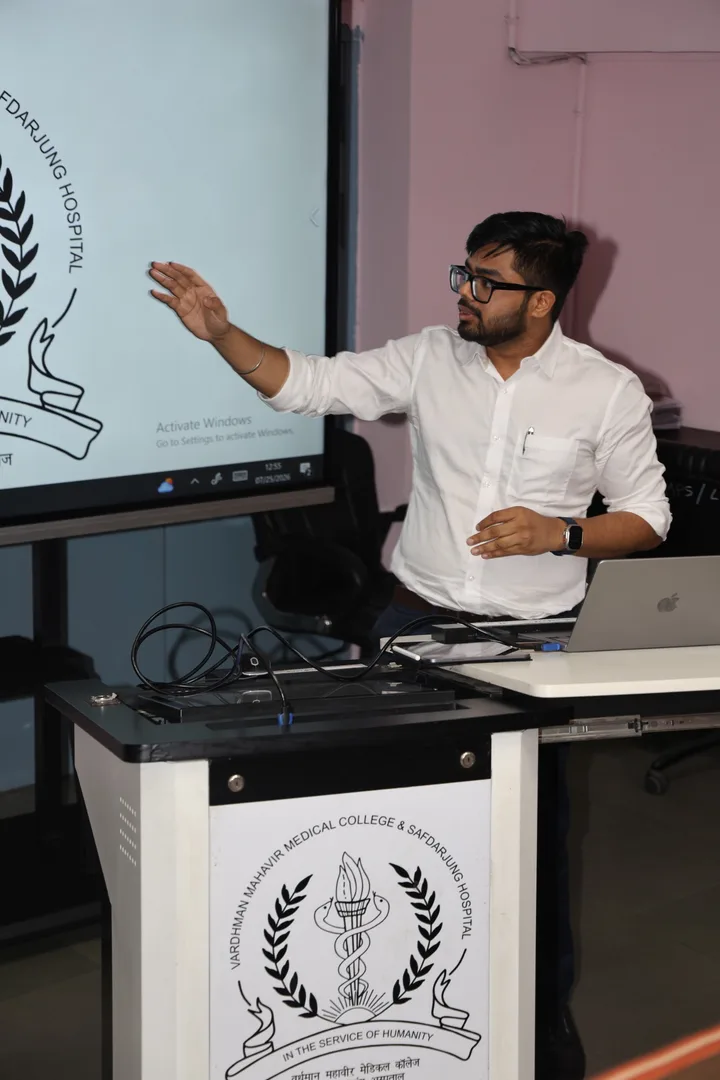
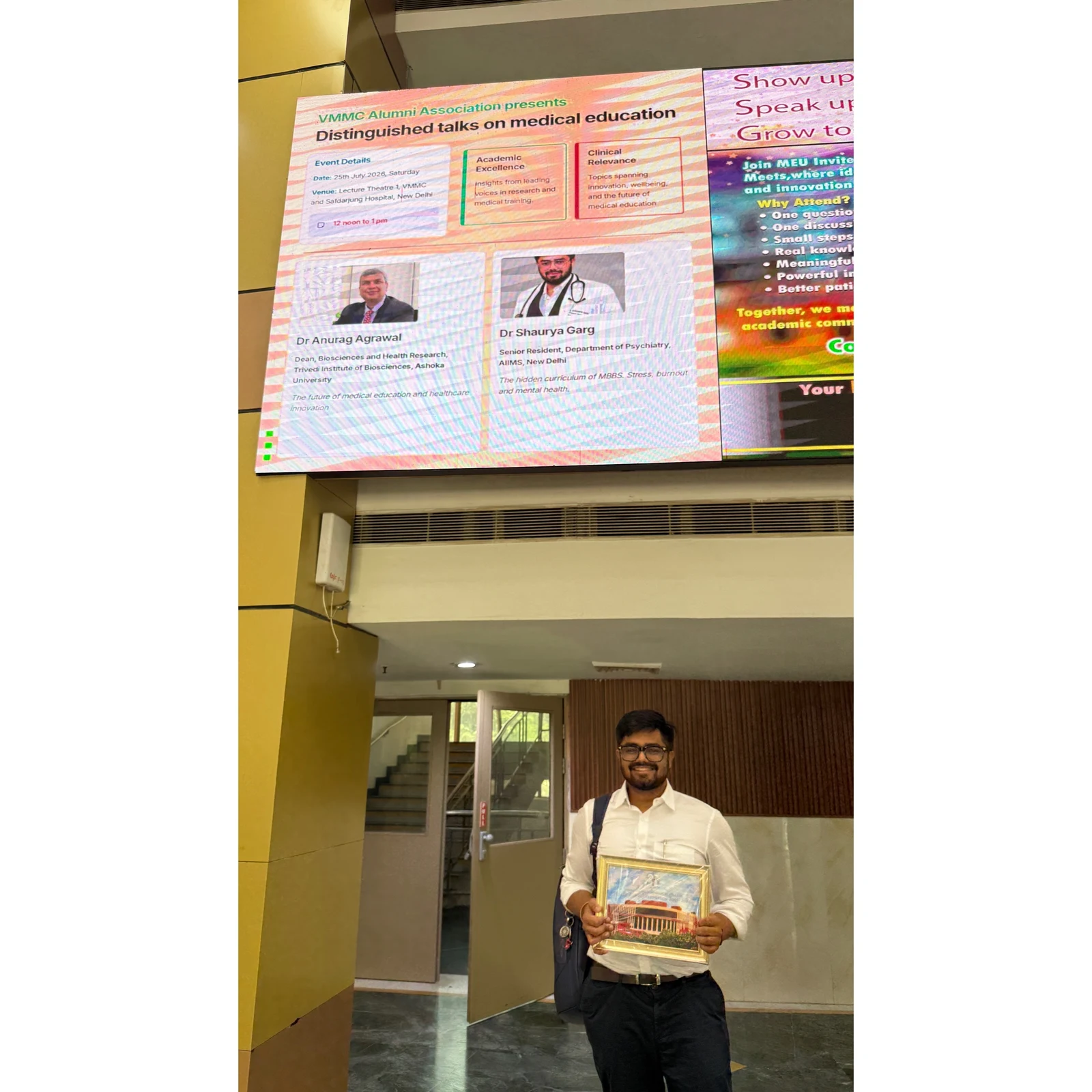
In 2016, Dr. Shaurya Garg was an MBBS student at Vardhman Mahavir Medical College & Safdarjung Hospital. Returning to his alma mater as invited guest faculty, on multiple occasions, has made the journey feel full circle.
There is something deeply meaningful about standing at the front of a lecture hall where you once sat as a student. The setting is familiar; the responsibility has changed. Today, his visits bring him into conversation with the next generation of doctors about the pressures of medical training and the importance of caring for their own mental health.
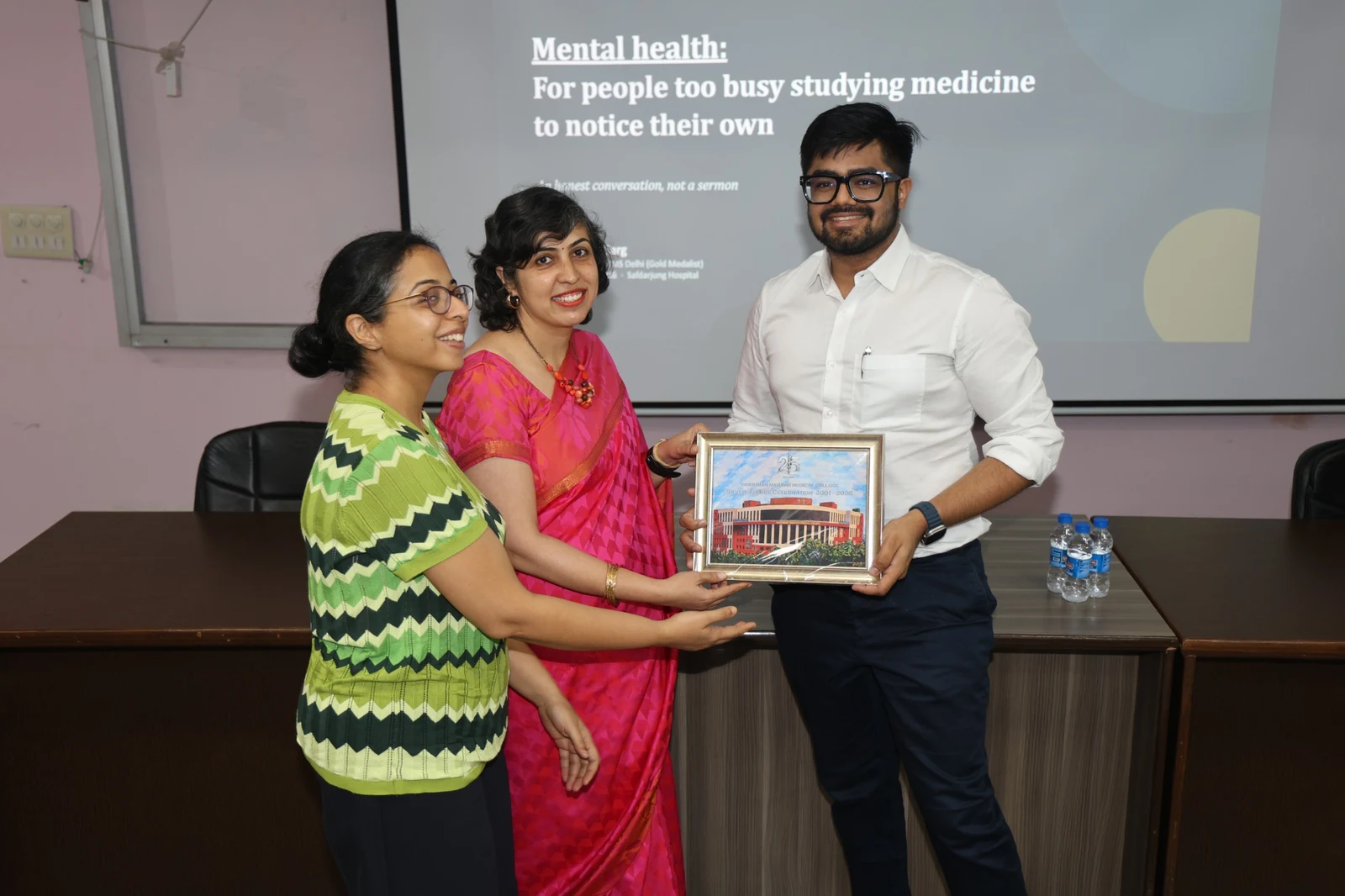
His invited sessions have included the VMMC Alumni Association’s Distinguished talks on medical education on 25 July 2026, where his talk was titled “The hidden curriculum of MBBS: Stress, burnout and mental health”, as well as a subsequent interactive session for first-year MBBS students.
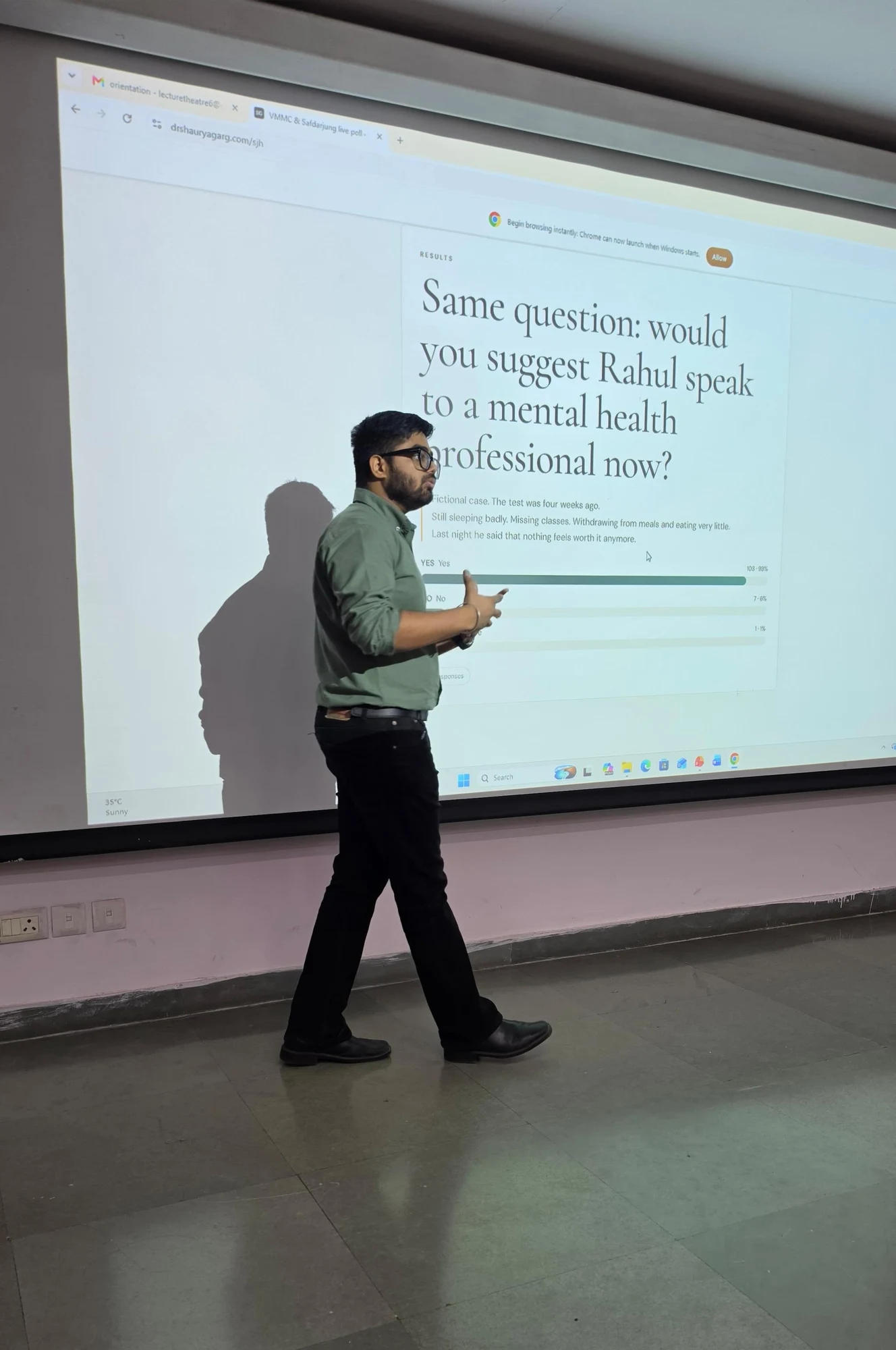
Through familiar student situations, live audience polls and open discussion, these conversations make room for questions that can be difficult to ask: when to seek help, how to support a struggling friend, and how to navigate medicine without losing sight of yourself.
For Dr. Garg, the privilege of returning lies in being able to give something back: perspective, encouragement, and a reminder that becoming a good doctor includes learning to recognise when you need support too.
From the guest sessions · Select a gallery photograph to view it larger.
Invited to deliver
the neurodiversity keynote
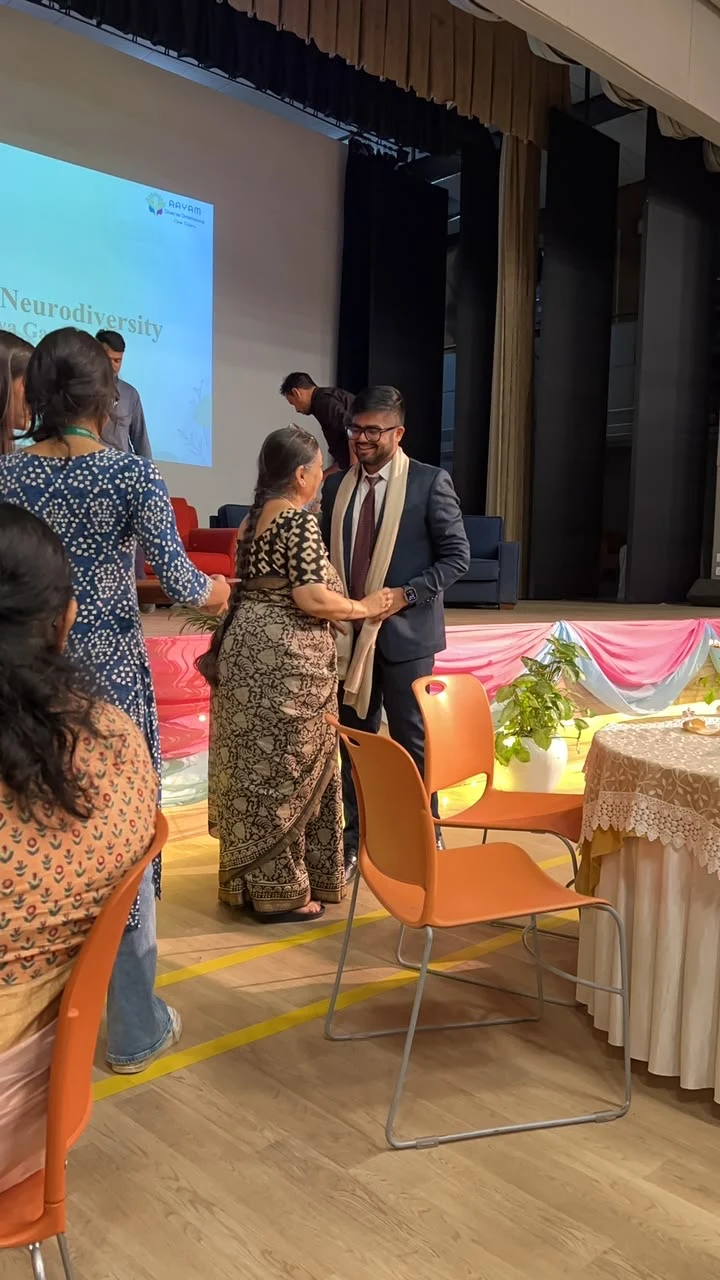
Heritage Xperiential Learning School, Sector 62, Gurugram, invited Dr. Shaurya Garg to deliver the keynote address on neurodiversity and join the subsequent expert panel at AAYAM, Counsellors’ Hub 2026.
As the Day 1 neurodiversity keynote speaker, he helped set the context for a wider conversation about belonging, understanding differences, and building more responsive school environments. The two-day programme brought together professionals from across mental health and education, including Dr. Saurabh Mehrotra of Medanta.
The keynote explored ADHD, autism, specific learning disorders and intellectual disability through school situations, audience participation and practical examples. Its focus was on helping participants understand individual needs, question assumptions about behaviour, and translate that understanding into thoughtful support.
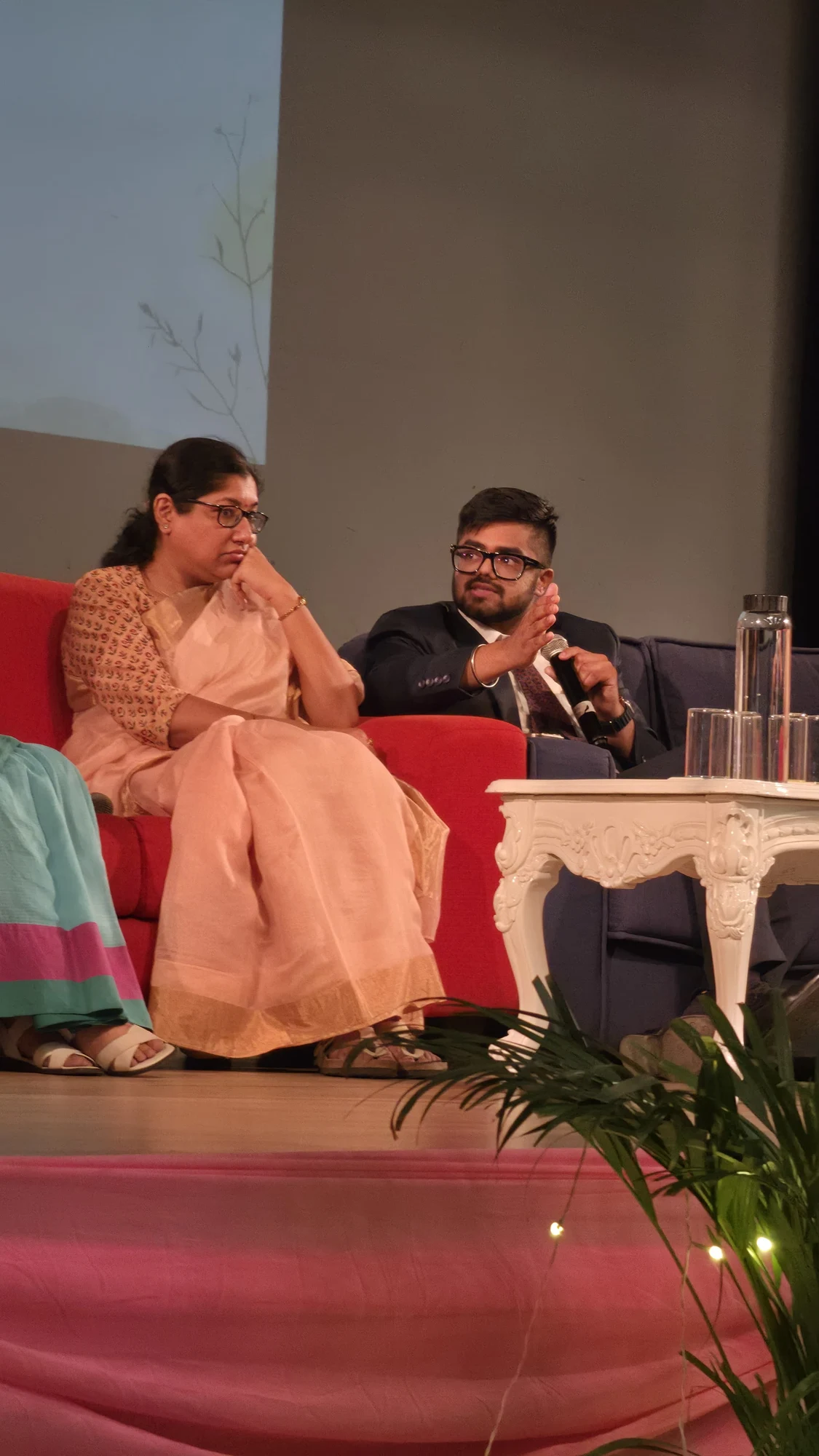
The neurodiversity panel continued that conversation through clinical, parent, student and school-counsellor perspectives. Questions of identity, access and lived experience brought the discussion back to the whole young person, and to what meaningful inclusion looks like in everyday school life.
Being invited to guide this conversation was a meaningful milestone in Dr. Garg’s work beyond the clinic: an opportunity to help the adults around young people respond with greater understanding, and to make space for young people’s own voices.
Explore the AAYAM neurodiversity resources →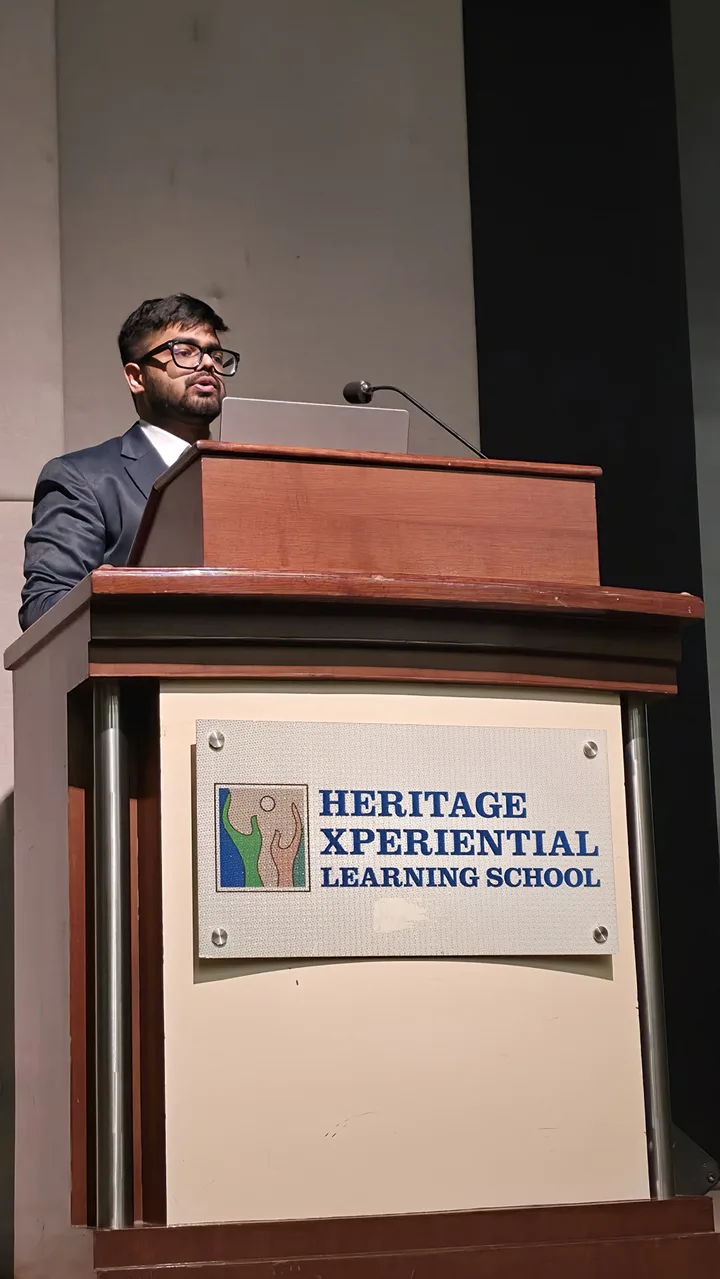
From AAYAM · Select a gallery photograph to view it larger.
Past audiences
Clinical perspective,
made useful in the room
Sessions have included students from IIT, NLU and the University of Delhi, alongside talks for schools, business programmes and workplace audiences.
The format can be a focused lecture, an interactive session or a moderated conversation. Content is adapted to the age, role and setting of the audience. A speaking session is educational and does not replace individual clinical assessment or treatment.
Topics and formats
A clear brief before
the first slide
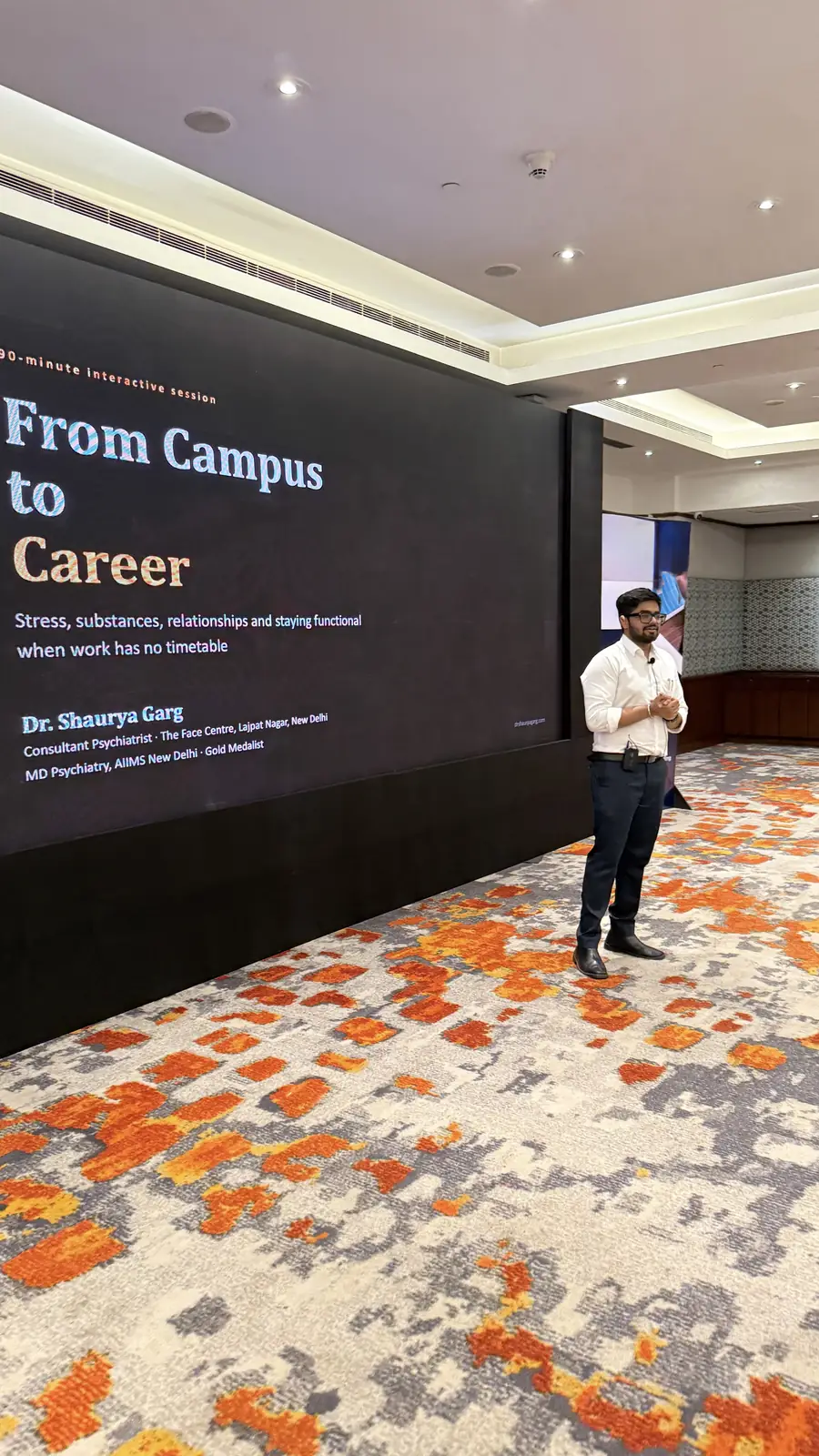
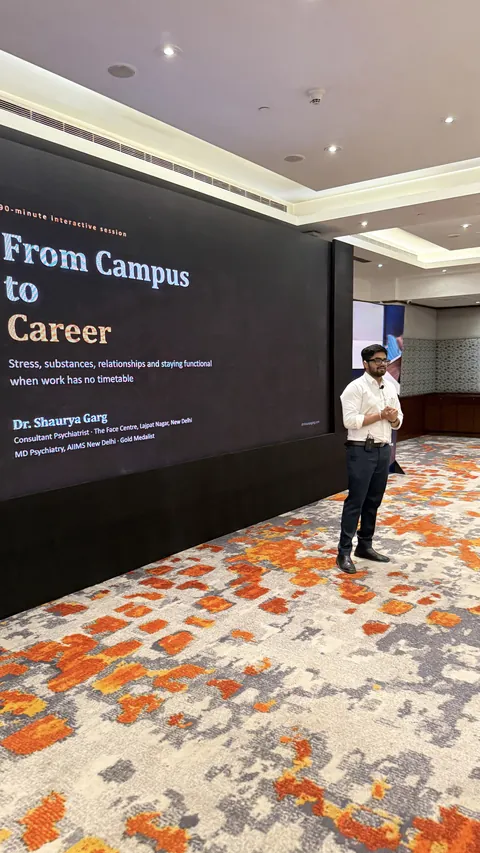
From campus to career
Stress, identity, relationships, substances and staying functional when work has no fixed timetable.
Student mental health
Anxiety, sleep, help-seeking, peer support and how to recognise when ordinary strain needs professional attention.
Mental health at work
Clinically grounded discussion of stress, burnout, boundaries and useful responses for managers and teams.
Neurodiversity & inclusion
Understanding ADHD, autism and learning needs, with practical conversations about belonging and support in school.
Medical student wellbeing
The pressures of medical training, recognising distress, seeking help and supporting peers. For students considering the specialty, read the psychiatry career guide.
Custom sessions
A session developed around the audience, available time and questions that matter in that setting.
Session enquiry
Start with the
audience and purpose
Share the setting, audience and preferred date. The clinic will reply with availability and any questions needed to shape the session.
This form is for educational and organisational enquiries. Please do not include diagnoses, symptoms, treatment details or other personal medical information.